


Agricultural Drone Precision Spraying and Seeding Solution
1. Background and Industry Pain Points
With the rapid development of modern agriculture, the management of large-scale farmland faces increasingly severe challenges. Traditional agriculture relies heavily on manual labor or large ground machinery for pesticide spraying, seeding, and fertilizing. However, manual labor is not only inefficient, time-consuming, and labor-intensive, but also suffers from labor shortages and high costs. Traditional machinery struggles in complex terrains such as hills, mountains, and uneven lands, often causing soil compaction and crop damage. Furthermore, extensive farming practices frequently lead to the overuse of pesticides and fertilizers, which not only increases production costs but also causes non-point source agricultural pollution. To address these pain points, this solution introduces agricultural drones to empower agricultural production with technology, comprehensively solving the management challenges of traditional agriculture.
2. Core Solutions and Advantages
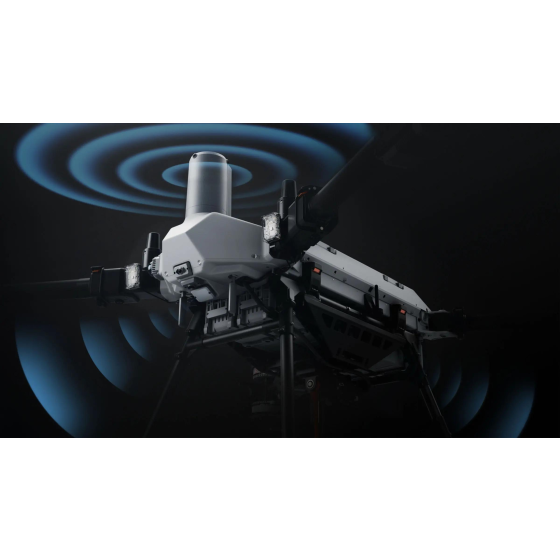
Relying on advanced drone platforms, combined with RTK high-precision navigation, intelligent obstacle avoidance, and variable-rate spraying/seeding technologies, this solution provides comprehensive aerial operation support for agricultural production. Its core advantages are reflected in the following three dimensions:
1. Precision Agriculture: Efficient Utilization and Green Ecology
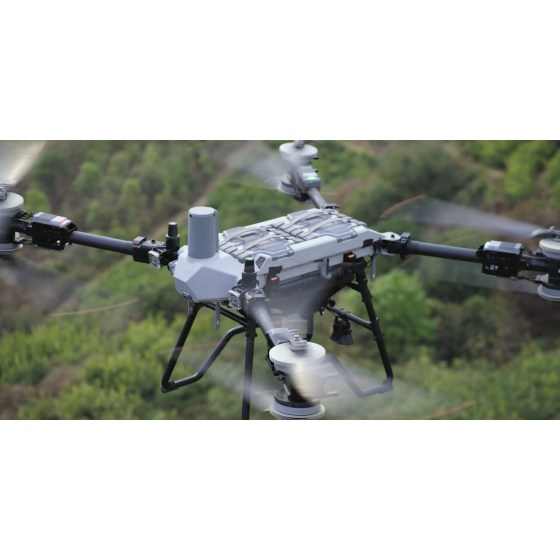
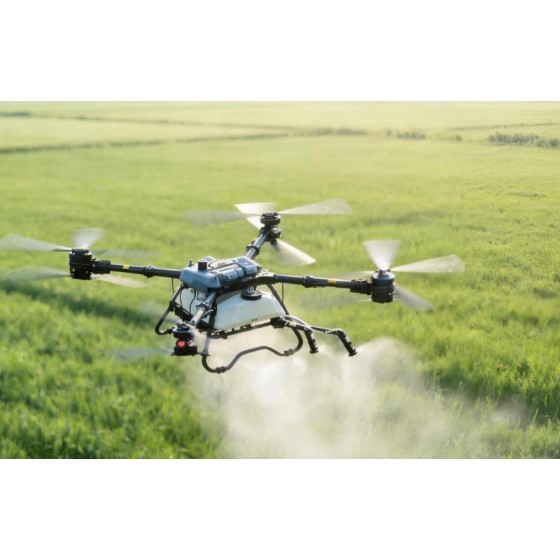
Equipped with high-precision sensors and intelligent spraying/seeding systems, drones have completely transformed the traditional extensive farming model. During spraying, centrifugal nozzles or airflow injection technologies atomize the liquid into micron-sized particles. Combined with a powerful downward wind field, this achieves 3D penetrating spraying from "inside out and top to bottom," ensuring even coverage on both sides of the leaves and effectively reducing pesticide use by over 30%. For fertilizing and seeding, precise variable-rate application is achieved through roller metering devices or augers. Combined with "prescription maps" generated by satellite remote sensing, it ensures "applying only where needed and in the exact amount required." This not only saves over 15% of fertilizers and seeds but also effectively reduces non-point source agricultural pollution, supporting the green and sustainable development of agriculture.
2. Faster Workflows: All-Weather and All-Terrain High-Efficiency Operations
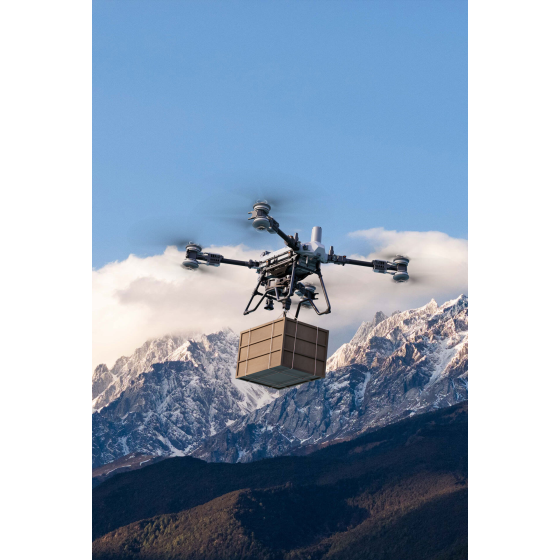
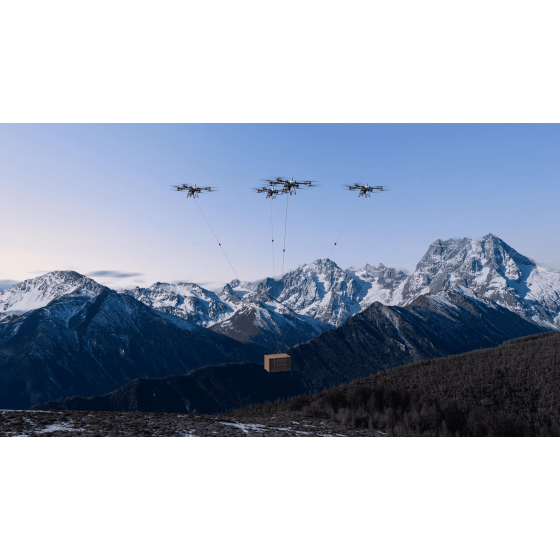
Drones break the limitations of terrain and environment, operating smoothly in various complex scenarios including plains, hills, forests, and even water surfaces. Relying on fully autonomous flight control systems, drones can automatically plan optimal flight routes, enabling continuous operation all day long without manual intervention through features like breakpoint resume, intelligent obstacle avoidance, and terrain-following flight. For example, in rice direct seeding, a single drone can complete over 80 mu (approx. 13 acres) per hour, which is more than 50 times the efficiency of manual labor. In orchard pest control or large-scale unified prevention, a single drone can cover hundreds to thousands of mu per day. This ability to "race against the farming season" ensures rapid completion of tasks during critical windows for pest outbreaks or spring plowing, significantly shortening the agricultural production cycle.
3. Labor Efficiency: Cost Reduction, Efficiency Enhancement, and Model Innovation
The large-scale application of drones completely frees farmers from heavy physical labor, achieving a leap from "carrying sprayers on backs" to "fingertip control." A single operator can accomplish in one day what previously required dozens of workers, greatly boosting productivity. Meanwhile, the solution supports innovative models like "drone + socialized services," such as one-stop "drone + pesticide + service" management, or forming professional pilot teams to provide per-acre charging services. This not only lowers the threshold for farmers to purchase equipment and reduces daily maintenance costs but also creates new professions like drone pilots and agricultural data analysts, driving the transformation of agriculture from "labor-intensive" to "technology-intensive."
-560x560.png)
-560x560.png)