Multi-functional Underwater Sonar Search and Rescue System
Complete Technical Parameters & Industry Application Fields
1. System Composition
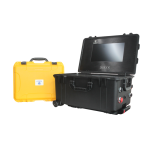
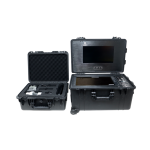
The search and rescue system is available in three configurations: vessel-mounted side-scan/multi-beam sonar, portable handheld search and rescue sonar, and ROV-integrated all-in-one sonar search and rescue platform. The general hardware components are as follows:
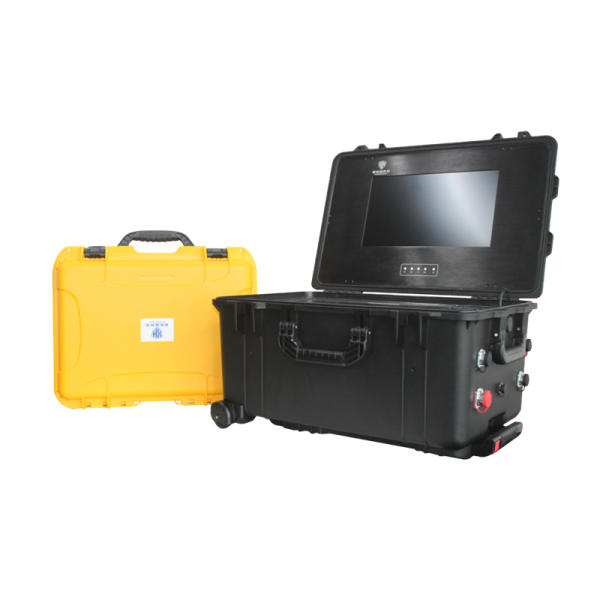
- Main control display terminal (waterproof high-brightness host)
- Multi-frequency CHIRP sonar transducer (integrated forward-looking, side-scan and down-scan)
- Underwater high-definition camera pan-tilt with fill light
- GPS/Inertial navigation positioning module
- Waterproof cables, tow fish and ROV underwater carrier
- Lithium battery power supply, data storage and AI target recognition software
2. General Core Technical Parameters (Mainstream Industrial Search & Rescue Standard)
2.1 Sonar Detection Performance
- Adjustable operating frequencies: 50kHz/83kHz/200kHz/455kHz/800kHz/1200kHz. Low frequencies for long-distance scanning; high frequencies for high-definition near-range imaging.
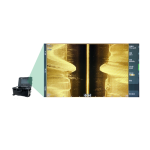
- Scanning modes: Side-scan 2D landform mapping, down-scan bathymetric profiling, 360° panoramic forward-looking multi-beam imaging, and CHIRP linear frequency modulation noise reduction.
- Detection range
- Handheld portable model: Radius adjustable in 3 gears (10m/20m/50m), coverage range 2m to 50m, 180° sector scanning.
- Vessel-mounted side-scan model: Maximum single-side coverage 180–600m; standard maximum operating water depth 300m (up to 2000m for deep-sea professional version).
- ROV-integrated multi-beam model: Effective viewing distance 40–120m, 512-beam high-definition imaging.
- Scanning efficiency: Approximately 87 square meters per second in long-range mode. A full 180° scan takes 30 to 45 seconds, covering 8,000 square meters of water area within 5 minutes.
- Target recognition: Built-in AI for automatic marking of human figures, vehicles, hulls, sunken ships and pipelines. It displays real-time target distance, water depth, azimuth and GPS coordinates.
- Resolution: Centimeter-level imaging under high-frequency mode, capable of identifying human bodies, fallen mobile phones and small metal debris.
2.2 Auxiliary Underwater Video Module (Re-verification for Turbid Water)
- Camera: 1080P/4K high-definition underwater camera with 360° electric rotating pan-tilt.
- Lighting: 5000LM dimmable high-power LED night vision fill light.
- Underwater visibility: 2–5m in clear water, 0.5–1.5m in heavily turbid water, serving as an auxiliary verification tool for sonar imaging.
- Maximum diving depth: 20–300m (varies by model).
2.3 Terminal & Electrical Parameters
- Display screen: 7/9-inch IPS high-brightness screen with 1200 nits for clear visibility under direct sunlight. Supports quad-view and six-view simultaneous display of sonar images, videos, maps and data.
- Operating system: Full Chinese interface with customizable shortcut keys. Real-time water temperature, water depth and longitude/latitude overlay available.
- Positioning system: Combined GPS, Beidou and WAAS differential positioning. Built-in electronic nautical chart with one-click positioning and coordinate saving for targets.
- Waterproof rating: Main unit IP67; underwater transducer, tow fish and ROV IP68 fully waterproof.
- Power supply: 12V DC lithium battery. Single battery lasts 4–8 hours. Supports external power supply from vessel mains.
- Operating environment: Working temperature -20℃ to +55℃. Applicable to icy water, flood sewage, offshore salt water and reservoir fresh water.
- Data functions: Full recording, playback and export of sonar videos. 4G and Bluetooth wireless transmission supported.
2.4 Parameter Comparison of Portable, Vessel-mounted and ROV Models
| Model Type |
Maximum Water Depth |
Maximum Scanning Radius |
Overall Weight |
Application Scenarios |
| Handheld Portable |
50m |
50m |
3–6kg |
Shore operation, inflatable boat rescue and under-ice search & rescue |
| Vessel-mounted Towed Side-scan |
300m |
600m (single side) |
25–40kg (complete set) |
Full-area search over large lakes, offshore waters and rivers |
| ROV-integrated Search & Rescue Platform |
300m |
120m |
Underwater unit: 15kg; Cable: 300m |
Exploration in areas with complex obstacles, sunken ships and underwater structures |
3. Core Features
- Operation in fully turbid water: Normal operation unaffected by sediment, flood sewage, darkness and night conditions. The sonar works independently when visual cameras fail.
- Multi-modal composite detection: Conduct large-area preliminary scanning via sonar to lock suspicious areas, then perform close-range verification with underwater videos, greatly reducing risks for divers.
- Full-area 3D mapping: Automatically generate underwater terrain profiles to identify deep pits, undercurrents, underwater obstacles and sunken vehicles.
- Multi-target storage and positioning: Mark multiple targets including drowning persons, vessels, wrecks and pipelines in batches, and export coordinates for salvage operations.
- Anti-interference design: Filter out clutter from water plants, silt and water flow to reduce false alarms caused by floating debris in floods.
4. Application Industries & Scenarios
4.1 Emergency Rescue & Public Security (Core Application)
Fire and Rescue Teams
- Search and rescue for people trapped in urban waterlogging, flooded roads and submerged underground garages.
- Salvage of drowning persons in rivers, reservoirs and ponds.
- Underwater search for people falling through ice in frozen lakes in winter.
- Location of missing persons and vehicles in mountain floods and barrier lakes.
Special Police & Water Police Stations
- Positioning and salvage of physical evidence such as mobile phones, weapons and vehicles related to drowning cases.
- Comprehensive investigation for missing persons in rivers and offshore waters.
Maritime and Coast Guard Law Enforcement
- Search and rescue for crew members from distressed offshore vessels.
- Detection of sunken ships, smuggling boats and underwater contraband.
- Underwater evidence investigation for maritime traffic accidents.
Civil Water Rescue Teams & Lifespan Associations
- Regular rapid search and rescue in scenic lakes and natural rivers.
4.2 Water Conservancy & Hydropower Industry
- Inspection of defects, cracks and scouring pits on dam bodies and foundations.
- Underwater terrain mapping and removal of sunken vessels and debris before river dredging.
- Inspection of foreign objects at water pump stations, water intakes and sluice gates to prevent equipment blockage.
- Regular safety patrols for missing vessels and personnel in reservoir areas.
4.3 Marine Engineering & Waterway Operation and Maintenance
- Detection of underwater obstacles, sunken objects and riprap in ports, wharves and waterways.
- Inspection of damage, exposure and displacement of submarine pipelines, cables and oil pipelines.
- Detection of scouring and cavities around pile foundations of bridge piers and cross-sea bridges.
- Underwater terrain mapping before waterway dredging and positioning for sunken wreck removal.
4.4 Underwater Salvage & Engineering Service Industry
- Pre-scanning for professional salvage of vehicles falling into rivers, crashed aircraft and sunken ships.
- Search for valuable underwater equipment, vessel parts and lost valuables.
- Safety inspection of cofferdams and underwater construction areas to avoid diving hazards.
4.5 Underwater Archaeology & Cultural Tourism Exploration
- Detection of ancient underwater ruins, sunken ships and cultural relics in inland ancient river courses and lakes.
- Large-scale scanning and mapping of ancient merchant ships and underwater heritage sites in offshore waters.
4.6 Military & Border Defense
- Surveillance of suspicious underwater targets in border rivers and offshore waters.
- Detection of underwater obstacles and small underwater vehicles in military waters.
- Auxiliary search and rescue system for naval vessels.
4.7 Other Application Scenarios
- Environmental protection & water services: Detection of foreign objects and structural inspection in sewage plants, deep wells and drainage rivers.
- Inspection of underwater equipment in cooling pools of nuclear power plants and chemical plants.
- Fishery management: Inspection of illegal fishing nets and sunken aquaculture facilities in reservoirs.
5. Typical Operation Process
- Deploy the sonar system on vessels or shore, and start long-range full-area scanning with side-scan mode.
- The AI system automatically marks and highlights suspicious targets and saves GPS coordinates.
- Switch to forward-looking multi-beam mode to narrow down the search range, and enable high-frequency mode for high-definition imaging.
- Lower the underwater camera probe to verify and confirm targets such as human bodies, vehicles and wrecks.
- Export target coordinates to guide divers and salvage vessels to carry out precise operations.